Hello! Today I will be talking about nutrition and the importance of consuming vitamins for a healthy mouth!
By: James Liu
Text
Nutrients are organic or inorganic chemicals in food that supply not only energy, but for growth, development, repair, and maintenance for the body.

A dental assistant must have considerable knowledge of nutrients as what a patient eats plays a key part in the health of their mouth.
One of the main factors of tooth decay is what a person eats. Cariogenic foods contains sugars that can be metabolized by bacteria in plaque. The cariogenicity of a food increases the longer it adheres to a teeth (sugary foods are generally more cariogenic than sugary drinks).

Most foods, even healthy fruits, are cariogenic to an extent. One of the best ways to prevent tooth decay is brushing and cleaning your teeth, preferably after each meal, or twice a day, and to not consume anything besides water (the forgotten nutrient) after your final cleaning of the day is done. It is also advised to only eat moderate amounts of highly cariogenic foods.
Vitamins are organic substances in tissues needed to maintain growth and good health. They do not supply energy, but are used to release energy from carbs, fats, and proteins.
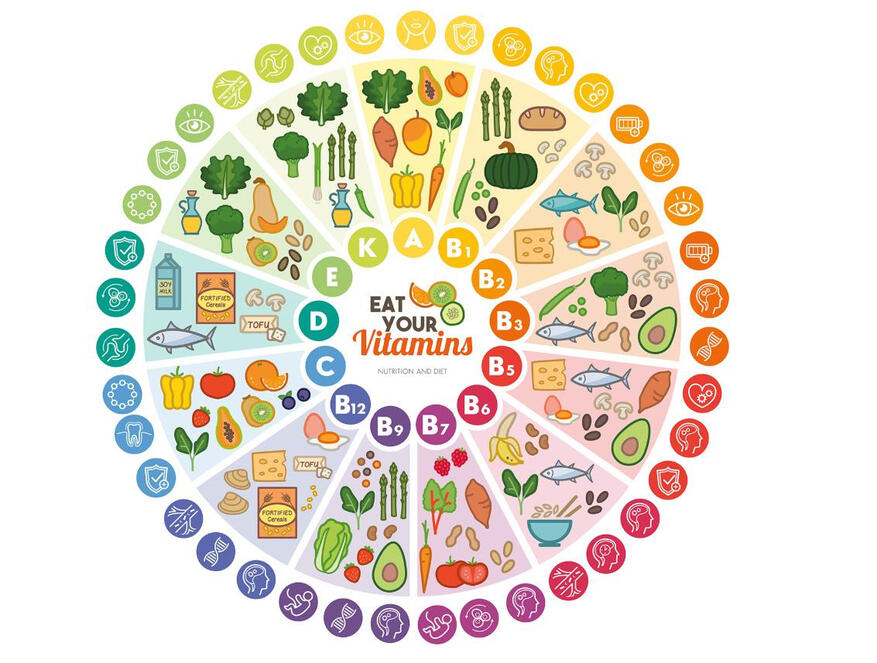
There are 13 known nutrients to date. 9 are water-soluble while 4 are fat-soluble. Fat-soluble vitamins (A, D, E, & K) are stored in body fat and are not destroyed by cooking. Water-soluble vitamins (B & C) are destroyed during food preparation, and must be consumed daily as they cannot be stored.
Certain vitamins help in teeth growth and maintenance.
A deficiency is a lack of vitamins, and result in negative symptoms.
| Vitamin | Sources | Functions | Deficiency symptoms |
|---|---|---|---|
| Vitamin A (carotene) | yellow/orange fruits and vegetables, leafy vegetables, oatmeal, liver, dairy products | formation/maintenance of hair and skin; sight in dim light; bone and tooth growth | night blindness, dry tongue, frequent fatigue |
| Vitamin B¹ (thiamine) | Cereal, oatmeal, meat, rice, pasta, whole grains, liver | Release of energy from carbs, growth, and metabolism | Heart irregularities, mental confusion |
| Vitamin B² (riboflavin) | Whole grains, leafy vegetables, organ meats, milk, eggs | Release of energy from protein, fats, and carbs | Convulsions, dermatitis, muscular weakness, skin cracks, anemia |
| Vitamin B⁶ (pyridoxine) | Fish, poultry, lean meats, bananas, prunes, dried beans, whole grains, avocados | Building of body tissue, metabolism of proteins | Cracks in corners of mouth, rash, anemia |
| Vitamin B¹² (cobalamin) | Meats, milk products, seafood | Cell development, nervous system functioning, metabolism of proteins and fats | Anemia, nervousness, fatigue |
| Biotin | Cereal/grain products, yeast, legumes, liver | Metabolism of proteins, fats, and carbs | Nausea, vomiting, hair loss, dry scaly skin |
| Folate (folic acid, folacin) | leafy vegetables, organ meats, beans, lentils | genetic material development, red blood cell production | gastrointestinal disorders, anemia, cracks on lip |
| Niacin | meat, poultry, fish, cereal, peanuts, potatoes, dairy products, eggs | metabolism of proteins, fats, and carbs | skin disorders, indigestion, general fatigue |
| Pantothenic acid | lean meats, whole grains, legumes, vegetables, fruit | release of energy from fats and carbs | fatigue, vomiting, stomach distress, infection, muscle cramps |
| Vitamin C (ascorbic acid) | citrus fruits, berries, vegetables, peppers | structure of bone, cartilage, muscle, and blood vessels; maintenance of capillaries and gums; absorption of iron | swollen/bleeding gums, slow wound healing, fatigue, depression, poor digestion |
| Vitamin D | fortified milk/margarine, butter, eggs, milk, sunlight | bone and tooth formation; maintenance of cardiac and nervous system function | rockets or bone deformities in children, loss of bone’s calcium in adults |
| Vitamin E | multigrain cereals, nuts, wheat, vegetable oils, leafy vegetables | protection of blood cells, body tissues, and essential fatty acids | muscular wasting, nerve damage, anemia, reproductive failure |
| Vitamin K | leafy vegetables, fruit, dairy, and grain products | blood clotting | bleeding disorders in newborns, requirement of blood thinning medications |